Why local businesses in Berlin need better ways to be discovered
How my community of Balkan women showed me that Berlin doesn’t lack great local businesses. We simply need better ways to find each other.
Posted on:
6 mins read

For some time now, I have been organising community meetups for Balkan women in Berlin. What started as a simple idea has grown into a community of more than 300 women, and it is still growing.
And there is something that happens again and again, whether we are sitting together at one of our meetups or simply talking in our group.
Does anyone know a mechanic who speaks our language?
Is anyone here a hairdresser?
Does anyone know a good accountant who can explain things to me in a language I actually understand?
Is there a woman here who makes those small traditional cookies we have for celebrations back home?
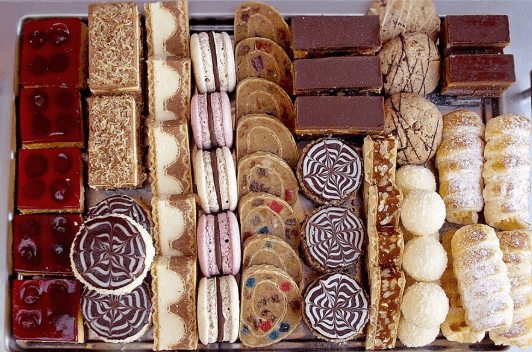
Sometimes the questions are practical. Sometimes they are incredibly specific. And sometimes they make me smile because I know exactly why someone is asking. (And yes, cookies you see above are the one someone was looking for.)
Because when you move to another country, finding what you need isn't always as simple as typing it into Google.
Sometimes you just want someone who understands
This is one of those things that I think you understand particularly well when you have lived outside your own country.
Sometimes you need someone who speaks your language because you have just arrived in Germany and your German isn't there yet. Calling a mechanic is stressful enough when you don't understand what is wrong with your car; trying to explain it in a language you barely speak makes the whole situation even harder.
Sometimes language isn't the problem at all. You speak German or English perfectly well, but you are looking for something very specific from home.
You want a cake that tastes like the one your mother used to make. You need somebody who knows how we celebrate a particular holiday. You are searching for a certain beauty treatment, a traditional product, a photographer who understands the kind of celebration you're organising, or those tiny cookies whose name you don't even know how to translate into German.
And sometimes you simply want to support someone from your community.
There doesn't always need to be a bigger reason than that.
We all like hearing our own language from time to time. There is a certain comfort in meeting someone who understands where you come from without needing a long explanation. Someone who knows the little cultural things, who perhaps moved here herself, who has dealt with the same bureaucracy, the same language struggles, the same homesickness and the same strange experience of building a life somewhere new.
Sometimes that familiarity matters.
The businesses are already here. We just don't know how to find them.
This is the part that kept catching my attention.
Every time somebody asked one of these questions, there was very often an answer.
My friend does that.
There's a woman in Neukölln who makes them.
I know a great hairdresser.
Talk to her, she speaks our language.
I'll send you her Instagram.
The people we were looking for existed. They were already living and working in Berlin. The problem was that we didn't know about them. I started collecting a list of all those business. But once I started noticing this inside our own community, I began thinking about how much bigger this problem must actually be.
Berlin is full of international communities. People have arrived here from all over the world, bringing their languages, professions, skills, recipes, traditions, ideas and businesses with them.
Some have established companies. Some are freelancers. Some work from small studios. Some have shops. Some make things from home. Some provide professional services. Some are just getting started.
But how do you discover them if you don't already know their names?
We still rely heavily on "Does anyone know someone?"
There is something almost funny about having incredibly sophisticated technology in our pockets while still solving so many local problems by opening a WhatsApp group and asking:
Does anyone know someone?
And, to be fair, it works. Actually, it works surprisingly well.
It works because there is trust behind the question. You're not necessarily looking for the business with the biggest advertising budget or the most polished website. You're asking people you know, or at least people with whom you share something, for their experiences and recommendations.
But there is also a limitation. Not everyone is in our group. Or not every community has a group like that.
And the answer depends entirely on who happens to see your message.
Maybe the perfect person is already in the community but doesn't see the message that day. Maybe somebody knows exactly the business you're looking for but forgets its name. Maybe the business owner isn't in that particular group. Maybe someone recommended her six months ago, but finding that old conversation now is almost impossible.
So we keep asking the same questions again and again.
And every time we do, valuable information appears for a moment and then disappears back into the conversation.
I started wondering: what if we didn't have to lose that information?
What if we could actually search for each other?
That question became one of the ideas behind Berlin for Her.
What if there were a place where you could start not with the name of a business, but simply with what you need?
Perhaps you're looking for a photographer.
Then maybe you want one in your part of Berlin.
And perhaps you'd feel more comfortable with someone who speaks Serbian, Croatian, Ukrainian, Polish, Turkish, Spanish, Arabic, English or whichever language makes communication easier for you.
Now you're not searching for a business you already know. You're discovering businesses you didn't know existed. And I think there is an important difference between the two.
Search engines are incredibly useful when we know what to search for. Social media is wonderful when we already know whom to follow. Community groups are powerful when the right person happens to see our question.
But there is room for another way of finding people.
A local directory can take all those scattered little pieces of information and make them searchable by the things that actually matter when we're looking for a service: what someone does, where they are, and which languages they speak.
Language is more than a filter
When I first started thinking about languages as part of the directory, it would have been easy to treat them as just another practical filter.
English. German. Serbian. Croatian. Ukrainian. Turkish. Polish. Spanish.
Select one and get your results.
But because of my experience with our Balkan women's community, I know that language can mean much more than convenience. For someone who has recently arrived in Berlin, finding a professional who speaks their language can make an intimidating situation feel manageable. For someone who has lived here for twenty years, it might simply feel nice. And for somebody else, choosing a business from their own community might be an intentional decision to support the people around them.
All of those reasons are valid.
Berlin is an international city, and I think the way we discover local businesses should reflect that reality.
Discovery can also strengthen communities
There is another side to this that matters to me.
Every time someone in our group asks for a recommendation and another woman replies, "I do that", something small but meaningful happens. Money that might have gone somewhere else stays within the community. A small business gains a new customer. Two people who didn't know each other before make a connection. If the experience is good, that customer might recommend her to someone else.
And suddenly one introduction becomes three. And I love that.
This is how communities grow stronger, not only through big initiatives, but through hundreds of small decisions to notice, recommend and support one another.
The same idea doesn't have to stop with my own Balkan community.
Berlin is full of overlapping communities, and women can belong to many of them at once. We are connected through where we come from, where we live now, the languages we speak, the work we do, motherhood, hobbies, professions, experiences and a hundred other things.
A directory cannot create those relationships by itself. But perhaps it can make the first introduction.
Maybe the person you're looking for is already here
That's ultimately what I learned from all those conversations with the women in our community. Very often, we don't have a shortage of people who can help us. We have a discovery problem.
The mechanic exists. The hairdresser exists. The photographer exists. The accountant exists. The woman making those little traditional cookies for celebrations exists.
We just need a better way to find her.
And that is one of the reasons I'm building Berlin for Her: to create another place where local businesses can be discovered, where language and location can make searching easier, and where the question "Does anyone know someone?" might eventually have a much easier answer.
Yes. Have a look. She might already be here.
So, welcome to Berlin for Her. Look around and discover who's here. If you have a business of your own, add yourself to the directory. And if you know a woman doing something wonderful in Berlin, bring her along too.
The more of us there are, the easier it becomes to find each other.

